Dr Abbot
The GodmotherDr Abbot is the doctor Rachel Elliot consults after deciding she wants a child. Her importance lies less in diagnosis than in how she changes the emotional terms of the appointment: what Rachel anticipates as a clinical ordeal becomes a candid, reassuring conversation, even as Dr Abbot makes clear that good preparation cannot remove uncertainty from conception.
Identity and Introduction
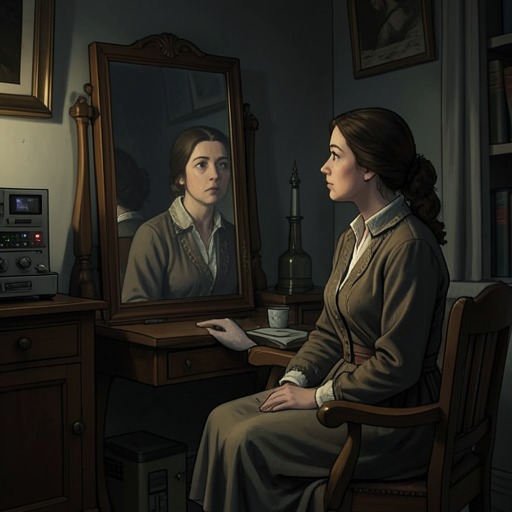
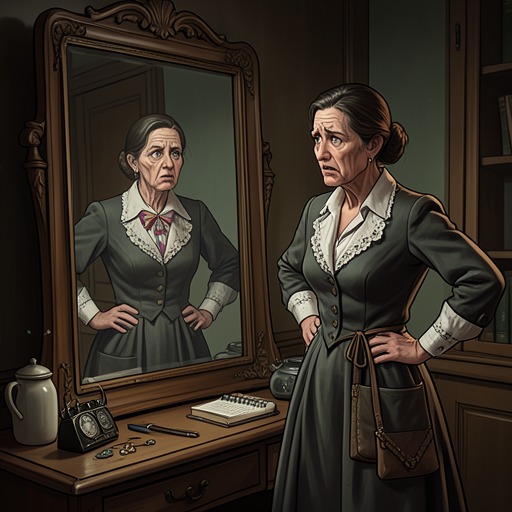
Rachel arrives expecting a medical encounter that will leave her exposed and vulnerable. She has a longstanding fear of medical practice, particularly its instruments and disinfectant, and associates not knowing what is happening to her body with losing the ability to judge and choose. When Dr Abbot greets her, Rachel is therefore caught off guard. The doctor’s friendly, round face and thick grey hair are unlike the figure Rachel had expected, and her hearty handshake initially does little to allay Rachel’s reservations.
Dr Abbot’s manner soon proves more consequential than Rachel’s first impression. Instead of immediately directing her toward an examination, she offers tea and treats the appointment as a conversation. Her office has the ordinary details of a working practice: a telephone, papers, a pen pot, and a nurse available to take material away. This familiar setting helps displace the intimidating image Rachel had formed of clinical treatment.
The Consultation
Rachel has chosen to seek advice because she has made the momentous decision to become a mother. Dr Abbot receives that decision with unembarrassed enthusiasm, congratulating her and affirming that wanting a child is something to feel pleased about. The response moves Rachel: she is so taken aback by the kindness that she struggles to speak. Dr Abbot’s attention is not merely procedural; she recognizes the emotional significance of the choice Rachel has brought into the room.
She then explains why she asks a series of questions before carrying out the check-up Rachel requested. Some women, she observes, skip this preparation and encounter difficulties later; discussing matters in advance can help identify potential problems before they grow. Her approach is matter-of-fact rather than ominous, and she tells Rachel that she looks fit as she begins with the basics. Rachel’s answers include that her periods are regular, she notices discharge around the middle of her cycle, she takes no drugs, does not smoke, and follows a sensible diet. The tea and the doctor’s straightforward manner make even the more personal questions easier than Rachel had feared.
Dr Abbot also asks whether Rachel has children and whether she has a partner. When Rachel raises her previous abortion, she wants to know whether it could affect her prospects. Dr Abbot distinguishes the abortion itself from possible complications: a postoperative infection could cause scarring or blocked tubes, but Rachel’s history gives no reason for concern. She tells her that there is no apparent family history of problems and that she is ovulating well. The consultation thus answers a specific fear without pretending to promise a result.
Advice and Manner
Dr Abbot gives Rachel a practical timing recommendation: intercourse should be timed for twelve to eighteen days after the beginning of her period. She also advises her to keep hoping, while stressing that chance remains part of the process. Her account of the body’s mysteries is notably different from a guarantee of medical control. Preparation can improve the opportunity, but it cannot make conception entirely predictable.
Her humor helps make this uncertainty bearable. When discussing how women sometimes seek fertility referrals despite having misunderstood the mechanics of conception, she jokes about the body’s many openings and the confusion some people have about how they work. Rachel laughs aloud. Dr Abbot’s humor is restrained by a broad smile rather than a matching outburst, and she returns to the questions. The exchange turns an embarrassing subject into something they can discuss plainly without dismissing its importance.
At the close, Dr Abbot recommends folate supplements: one tablet daily slightly reduces the incidence of neural tube defects such as spina bifida. When Rachel becomes worried by the term, the doctor reassures her that healthy babies are born to women of all ages every day. Taking the tablets is optional, she explains, but Rachel should give herself the best possible chance. Rachel leaves the appointment more warmly disposed toward her than when she arrived and thanks her for her kindness.
Narrative Role and Significance
Dr Abbot’s scene translates Rachel’s private decision into the language of reproductive health without reducing it to a medical problem. She asks about the body, explains risks, and offers concrete steps, but her reassurance is carefully bounded: timing and supplements can help, while luck and biological mystery remain. That balance matters in a story where Rachel’s desire to plan motherhood later meets the limits of what bodies and relationships can be made to do. An article Rachel encounters subsequently questions the assumption that the body can be programmed at will, and a later disclosure about Will Raphael’s congenital infertility gives that uncertainty a personal consequence. Dr Abbot does not diagnose or resolve those later developments; her consultation establishes the initial, measured version of the tension between informed preparation and outcomes no one can guarantee.
The appointment also gives Rachel a rare experience of discussing her wish without being hurried or shamed. Dr Abbot’s willingness to make time, offer tea, explain questions, and respond to Rachel’s concern about her abortion makes medical authority feel supportive rather than diminishing. Her role is brief, but it marks a threshold: Rachel’s decision has moved from the private page of her diary into practical consideration of how to try to conceive.